What You Will Know After Reading This
- Why every $1 of ServiceNow licensing typically pulls $3 to $5 of partner services in Year 1.
- How Foundation, Advanced and Prime tiers price out at roughly $70 to $200+ per fulfiller seat per month.
- Why fulfiller seats, not requesters, set your core license bill.
- What CMDB data preparation and IntegrationHub overhead add before go-live.
- How to build a defensible Year-1 TCO budget your CFO will sign.
Table of Contents
- The Core Enterprise Reality: Why the Sticker License Predicts Your ServiceNow Invoice So Badly
- ServiceNow Implementation Cost Matrix and Scenario Math
- The Ekfrazo 5-Stage ServiceNow Deployment & Budget Framework
- Where ServiceNow Projects Fail: Hidden Scope Creep and CMDB Traps
- Qualification Matrix: Big-Bang vs Phased ITSM Implementation
- How Ekfrazo Delivers Predictable ServiceNow ROI
- Frequently Asked Questions
The Core Enterprise Reality: Why the Sticker License Predicts Your ServiceNow Invoice So Badly
Budgeting only for licenses fails because services, integrations and CMDB cleanup typically consume about 75% of Year-1 ServiceNow implementation cost, leaving the subscription line at roughly 25% of real cash out.
Your ServiceNow quote lists fulfiller seats and a tier. It never shows the work needed to make the platform useful.
Industry practice puts the ratio at $3 to $5 of certified partner services for every $1 of software. The money goes into workflow design, integration mapping, CMDB discovery, data reconciliation, testing and user enablement.
So CIOs walk into the board with a $150,000 license number. Six months later the program has spent $600,000, and the CFO wants to know who missed it. Nobody did. The budget simply measured the wrong thing.
The fix is to price ServiceNow as a program, not a product. That means modelling services, integration and data work from day one, then sizing the license tier to the processes you will actually run.
Planning a ServiceNow Rollout or Budgeting Your Next License Renewal? Stop guessing figures. Request a ServiceNow implementation consultation to audit your architecture and scope with Ekfrazo’s senior engineers.
ServiceNow Implementation Cost Matrix and Scenario Math
A mid-market ServiceNow implementation cost model should carry five lines, with partner services, integrations, CMDB work and training together adding roughly 3x to 5x the annual license spend in Year 1.
| Cost Element | Year-1 Budget Range | Cost Driver | Risk if Underfunded |
|---|---|---|---|
| Software licensing (ITSM tier + add-ons) | $70 to $200+ per fulfiller seat/month | Fulfiller count x tier (Foundation, Advanced, Prime) | Paying Prime rates for Foundation-level usage |
| ServiceNow consulting cost (partner implementation) | 2x to 3x license spend | Module count, customization depth, process maturity | Change orders, stalled go-live |
| Integrations (IntegrationHub spokes, custom APIs) | 0.4x to 0.8x license spend | Number of external systems, transaction volume | Swivel-chair manual work survives go-live |
| CMDB discovery and data hygiene | 0.2x to 0.6x license spend | CI volume, number of data sources, duplicate rate | Broken routing and false impact analysis |
| Training, governance and change enablement | 0.3x to 0.5x license spend | User population, admin bench depth | Low adoption, shadow ticketing in email |
Ranges are Ekfrazo planning estimates based on the 3x to 5x rule, not ServiceNow list prices.
Scenario: 50 Fulfillers Deploying ITSM + ITOM
Take a 2,000-employee enterprise with 50 fulfillers: service desk agents, resolver groups, change approvers and two platform admins. Its 2,000 requesters cost nothing.
- ITSM license: 50 seats x an assumed $120/month on the Advanced tier x 12 = $72,000.
- ITOM subscription: assumed $48,000 for Discovery and Event Management on the in-scope estate.
- Total annual license: $120,000.
- Partner implementation (2x): $240,000.
- Integrations and CMDB hygiene (0.6x): $72,000.
- Training and governance (0.4x): $48,000.
Year-1 TCO lands at $480,000, or $9,600 per fulfiller. That is the 3x case. With a dirty CMDB and rebuilt legacy workflows, the same program can reach 5x, or $720,000.
Visual: Year-1 TCO Breakdown (Licensing vs Services)
+-------------------------+     +------------------------------+
|   Software License      |     |   Partner Implementation     |
|        25%              |  +  |          50%                 |
|   $120,000              |     |   $240,000                   |
+-------------------------+     +------------------------------+
              +                                +
+-------------------------+     +------------------------------+
| Integrations & CMDB     |     | Internal Training &          |
| Hygiene      15%        |  +  | Governance   10%             |
|   $72,000               |     |   $48,000                    |
+-------------------------+     +------------------------------+
                            |
                            v
          +-----------------------------------+
          |   TOTAL YEAR-1 SPEND: $480,000    |
          |   License 25%  |  Services 75%    |
          +-----------------------------------+
The Ekfrazo 5-Stage ServiceNow Deployment & Budget Framework
Ekfrazo controls Year-1 spend through five gated phases, each tied to a budget line, so tier selection, CMDB quality, customization, integrations and FinOps are decided before they become change orders.
Phase 1: Fulfiller Seat Auditing & Tier Selection (Foundation vs Advanced vs Prime)
Start with a role census. Anyone who works or administers records is a fulfiller; anyone who only raises requests is a free requester. Occasional approvers can often use approval-only workflows instead of paid seats.
Then match the tier to the workload. Foundation covers core incident, problem and change. Advanced adds richer automation and analytics. Prime bundles the fuller Now Assist AI capability set. For renewals, see our guide on ServiceNow licensing optimization frameworks.
Phase 2: CMDB Discovery & Data Hygiene (Preventing Garbage-in, Garbage-out)
Run Discovery through MID Servers, then define IRE (Identification and Reconciliation Engine) rules before any second data source loads. Without IRE precedence rules, SCCM, cloud and Discovery feeds create duplicate CIs that break routing. Track CI health across completeness, correctness and compliance, and set a go-live threshold. Our team’s approach to workflow automation and CMDB hygiene treats this as a funded workstream, not cleanup after launch.
Phase 3: Out-of-the-Box Workflow Adoption vs Customization Governance
Every custom script is a future upgrade cost. We default to OOTB ITIL-aligned flows in Flow Designer and route true exceptions to a design authority. New apps go to App Engine as scoped applications, never into the core ITSM tables.
Phase 4: IntegrationHub & External System Connectors (Jira, Datadog, ERP)
IntegrationHub is licensed separately and metered by transactions, so model volumes early. Use prebuilt spokes for Jira and ERP platforms, and Service Graph Connectors or event rules for monitoring tools like Datadog. Each custom REST integration adds build, test and ongoing support cost.
Phase 5: Governance, Change Enablement, and Post-Go-Live FinOps
Stand up a platform owner, a CAB for platform changes and a quarterly license true-up. Track fulfiller utilization monthly. Idle seats and unused Now Assist entitlements are the first FinOps savings in Year 2.
Where ServiceNow Projects Fail: Hidden Scope Creep and CMDB Traps
Most ServiceNow budget overruns trace to four patterns: legacy workflow replication, dirty CMDB data, unmetered integrations and missing post-launch ownership, each capable of pushing services from 3x toward 5x license spend.
1. Rebuilding the old tool line for line. Teams ask the partner to reproduce every legacy form, field and approval path. Customization, upgrade drag and services hours all climb. OOTB ITIL flows exist so you do not pay to reinvent them.
2. Loading dirty CMDB data. Incident routing, change risk scoring and Now Assist recommendations all read the CMDB. Feed it stale or duplicate CIs and automation sends tickets to the wrong group. Agents lose trust and return to email.
3. Treating integrations as an afterthought. A Jira sync or ERP connector scoped late becomes a change order. Transaction volumes nobody modelled surface as an IntegrationHub true-up.
4. No owner after go-live. Without a platform owner, requests pile up, fulfiller seats drift upward and the Year-2 renewal arrives larger than planned.
3 Questions CFOs Must Ask Before Approving a ServiceNow SOW
- What percentage of in-scope workflows are OOTB, and who signs off each customization?
- Is CMDB discovery and IRE rule design a separately funded line with a CI health exit criterion?
- How many integrations are in scope, and what IntegrationHub transaction volume does the SOW assume?
Qualification Matrix: Big-Bang vs Phased ITSM Implementation
Choose a phased ITSM implementation when integrations, CMDB quality or admin capacity are weak, and a big-bang launch only when processes, champions and a single-module scope are already in place.
| Trigger | Phased Rollout If | Big-Bang Launch If |
|---|---|---|
| Integrations | Five or more external systems (Jira, monitoring, ERP, HR) need connectors | Few or no integrations at launch |
| Data and process | CMDB has duplicates, no IRE rules, or unknown CI ownership | ITIL processes are documented and already followed |
| People and scope | Fewer than two certified internal admins | Strong internal champions and a single-module scope, such as incident and request only |
Phased programs cost slightly more in project management. They cost far less in rework.
How Ekfrazo Delivers Predictable ServiceNow ROI
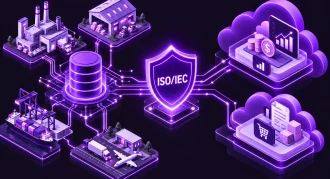
Ekfrazo ties every ServiceNow deployment to measurable CX, EX and OX outcomes under ISO/IEC-aligned governance, with fixed phase gates designed to hold services spend near the 3x end of the range.
Correct first-time routing lifts CX. Trusted CMDB data and Now Assist summaries lift EX. Integrations that remove manual handoffs between ServiceNow, Jira and ERP lift OX.
Our ServiceNow consulting and implementation services start with a fulfiller census and CMDB readiness score, not a module wishlist. Every phase closes against documented exit criteria, and you see the Year-1 TCO before the SOW is signed.
Know Your Real Year-1 Number Before You Sign
Ekfrazo’s senior architects will audit your fulfiller roles, tier fit, CMDB health and integration scope, then hand you a Year-1 TCO model your CFO can defend.
Frequently Asked Questions
These five answers cover the questions enterprise buyers ask most about ServiceNow implementation cost, consulting fees and ITSM implementation timelines, with Year-1 figures drawn from the 3x to 5x services rule.
How much does a ServiceNow implementation cost?
Using the 3x to 5x services rule, a 50-fulfiller ITSM and ITOM program with $120,000 in annual licenses lands between $480,000 and $720,000 in Year 1. Licensing is about 25%; services make up the rest.
What is the typical ServiceNow consulting cost compared to licensing?
Enterprises typically spend $3 to $5 on certified partner services for every $1 of ServiceNow licensing. Partner implementation alone usually runs 2x to 3x license spend, with integrations, CMDB hygiene and training adding the balance.
Do requesters need a paid ServiceNow license?
No. Requester seats for employees who only raise tickets cost nothing. Fulfillers, meaning agents, resolvers, admins and staff who act on records, drive the core license bill. Confirm how approvers are treated in your specific contract.
How long does an ITSM implementation take?
A focused ITSM implementation covering incident, request and change typically takes three to six months. Phased programs that add ITOM, CMDB discovery and several integrations often run six to twelve months.
What is the difference between ServiceNow Foundation, Advanced and Prime?
The three AI-native ITSM tiers range from roughly $70 to $200+ per fulfiller seat per month. Foundation covers core ITSM processes, Advanced adds deeper automation and analytics, and Prime bundles the fuller Now Assist AI capability set.